
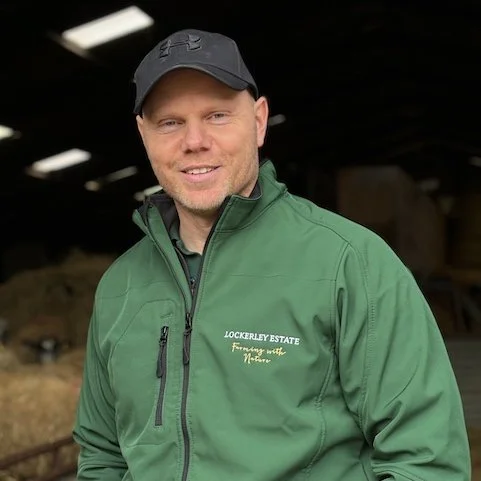
Craig Livingstone
FARM NAME: Lockerley Estate and Preston Farm, Hampshire
FARM SIZE: 2,000 ha
DESCRIPTION: Lockerley Estate and Preston Farms is a progressive, regenerative and successful farming business that champions an approach to agriculture where biodiversity, the soil, and the wellbeing of its community and future generations, is at the heart of all it does.
FARM NAME: Lockerley Estate and Preston Farm, Hampshire
FARM SIZE: 2,000 ha
DESCRIPTION: Lockerley Estate and Preston Farms is a progressive, regenerative and successful farming business that champions an approach to agriculture where biodiversity, the soil, and the wellbeing of its community and future generations, is at the heart of all it does.
Notably, they are a diverse, rural estate with 1300ha arable crop production, 235ha agri environment, 330ha woodland, 40ha miscanthus, 45ha solar farm, 7.5ha vineyard, and 95ha grass pasture. Working in collaboration, there are also over 1000 grazing sheep and 100 cattle on the farm.
With 11 soil types ranging from Givendale clay to Andover chalk, they grow a diverse arable rotation, including agri environment options whilst matching soil type with end-user crop quality requirements. Around 500ha of cover crops are grown annually and grazed by sheep, and oilseed rape and some wheats are grown with companion crops.
In spring 2016, the Estate and Farm began their shift to regenerative practices and, to date, they have achieved a significant reduction in pesticide spend, a reduction of 53% in tonnes of nitrogen fertiliser in the same period, and continued increase in key soil indicators.
Craig forecasts for the 25’ season, they’ll earn between £75,000 and £100k on regenerative practice premiums.


THEIR APPROACH TO FEEDING THE SOIL:
Lockerley is guided by 5 main principles to support their regenerative approach to crop production:
1) Minimise soil disturbance physically and chemically
2) Keep soil covered and armoured
3) Living roots in the soil all year round
4) Diversity in crop rotation and plant species
5) Integration of livestock
Winter oilseed rape is grown with a three species companion crop, namely, fenugreek, clover and buckwheat, and just under 40% of the total wheat planted across the business is a three-way blend of group 2 wheat. As a grower of Wildfarmed wheat, they also have companion crop of clover with spring wheat
In addition, Lockerley have over 1,000 sheep grazing cover crops and leave 30% of crop residues behind. A super 10 species mix has been used previously but they have moved away from this to a bespoke 7-way mixture. Lambs graze heavier soils and lighter land sees tupping ewes.
In 2024 they started making compost along the Luebke method. Now all drilling is done with a compost extract liquid. They cover roughly 20 hectares per drill fill.
Seed treatments haven’t been used for the past 5 years but all seed is lab tested. No bagged P or K is used and is substituted with FYM, compost, fibrophos, cover crops and foliar products.
They have also been spreading farm yard manure (FYM) (a mix, including sheep and cattle manure) which they have combined with woodchip to sit for a year. They spread this muck at 10-12 tonne a hectare.
Across the estate Craig also has a complex agri environment scheme connecting the x2 SSSI and SAC. Whole field options along with rotational plot options are used with some fields seeing 12 different management options stacked onto the food produced whilst enhancing wildlife. Corn bunting, nightingale and stone curlew have been recorded in recent surveys. The farm have used an independent ecologist to collate data to ensure public money is delivering for the intended outcome.
CHALLENGES:
Higher soil Ph combined with heavy clay cap and high stone content brings challenges in nutritional availability at peak times. To tackle this, they use liquid potash but continue to interrogate SAP analysis to identify antagonisms with a view to balance crops through nutritional inputs.
Craig and his team are also practising the Johnson-Su composting method but have been having consistency issues. In the first year it was really dark, clay-like and humified but the next year it became too hot and dry – so this is an area they’re still working on.
Spring barley is the only crop they have inconsistency within their system.
TOP TIPS:
Appropriate soil movement is considered for every soil type in each field. A low disturbance subsoiler is used to ensure soils remain aerobic.
Seed rates are increased in a direct drill scenario.
The team at Lockerley have been quick to learn the Luebke composting technique. They have found it works well to make compost in their large barn when the sheep have finished lambing. The windrows of finished compost are then taken out onto surrounding ground to mature.
The team have realised the importance of using toptex covers to cover the windrows of compost to prevent them losing moisture and nutrients.
Not only are they using the compost on the farm there is also a strong demand for the compost in our veg shed
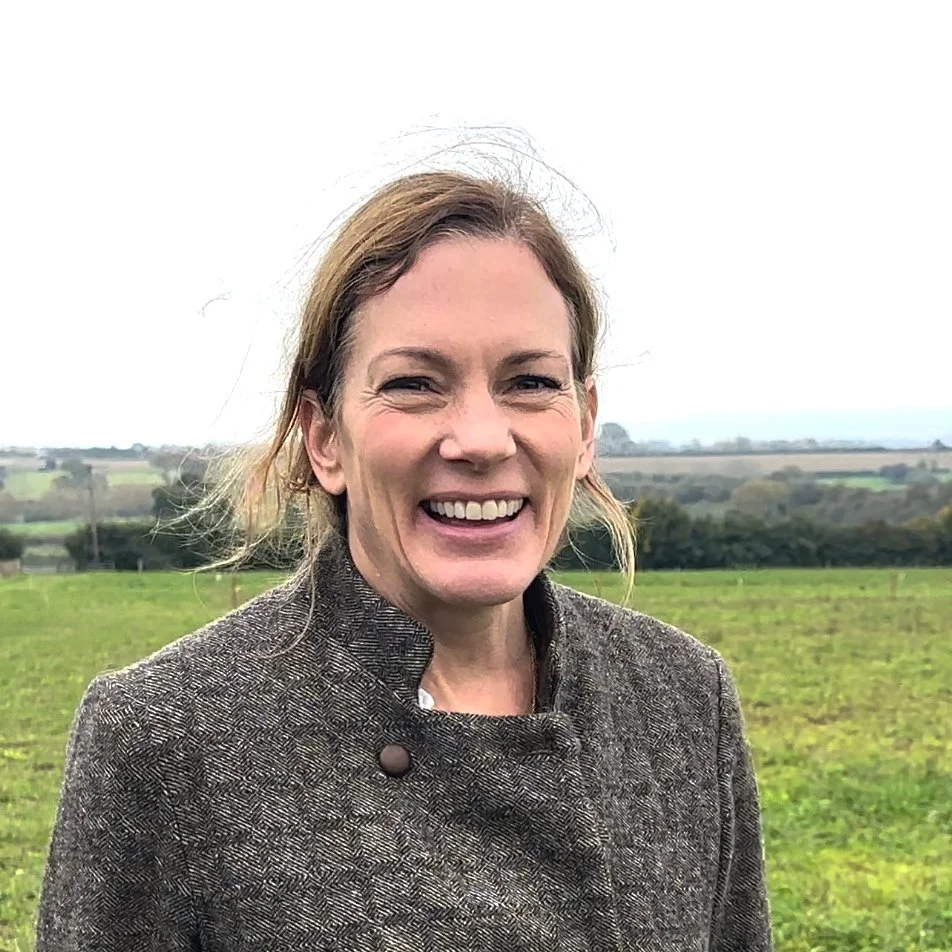
Rose Dale
FARM NAME: Rose Dale’s Organic Farm, Buckinghamshire
FARM SIZE: 90 ha
DESCRIPTION: Rose Dale’s Organic Farm has been farmed by her family for over 50 years. When Rose took over the farm in 2019, she was determined to produce healthy, nutritious food in a way that is nature-friendly and truly regenerative and sustainable, looking after soil, water and air for future generations. She has since built a business committed to these values, direct-selling her quality meat to local customers.
FARM NAME: Rose Dale’s Organic Farm, Buckinghamshire
FARM SIZE: 90 ha
DESCRIPTION: Rose Dale’s Organic Farm has been farmed by her family for over 50 years. When Rose took over the farm in 2019, she was determined to produce healthy, nutritious food in a way that is nature-friendly and truly regenerative and sustainable, looking after soil, water and air for future generations. She has since built a business committed to these values, direct-selling her quality meat to local customers.
All Rose’s meat is organic and 100% grass-fed and is produced from diverse long-term pastures including permanent pasture flood meadows, herbal lays, rich wildflower meadows and old ridge and furrow. The farm is certified organic and pure grass-fed by the Soil Association and Pasture for Life.
Rose’s farm is also a good example of an average-sized UK farm.


THEIR APPROACH TO FEEDING THE SOIL:
Rose is working on a holistic, closed system where she has the right number of ruminant livestock that her farm can support and, importantly, her aim is to run the farm with minimal external inputs.
Rose’s small flock of Gotland sheep and herd of 25 breeding Longhorns and their followers, spend their lives on her land, eating only leafy plants. They are never fed grain or grain-based foods. They are nearly always outdoors where they naturally fertilise the soil and increase soil health and biodiversity.
The livestock are all paddock-grazed, meaning they are regularly moved to fresh blocks of pasture, afterwards allowing a sufficient rest period for full plant recovery before the pasture is grazed again. This supports strong plant growth, maximising photosynthesis and increasing productivity and soil health. A win-win farming system. It also prevents soil compaction during wet weather as the animals are moved on before damage can occur. In addition, the natural fertility from animal manure means fertility is provided without the use of chemicals.
They are now working to make more out of their farmyard manure. Prior to calving, the breeding cows and their un-weaned calves come in for the end of winter, creating farmyard manure. The ewes also come in for lambing. In spring, this manure was cleared from the barns, piled up in windrows, 2.5m-3.5m high and treated with microbes.
The farm is also looking at spraying microbes onto bedding and into animal feed when their livestock come into the barns in the winter to kick-start the fermentation process. The manure will then be treated again with microbes when it is are piled up in windrows and left to mature for use in 8 –10 weeks.
Rose is part of a biodiversity net gain scheme which involves management of a floodplain mosaic for freshwater species and is planting trees and hedgerows to increase wildlife habitat and to provide her livestock with both shelter and tree and hedge forage.
She also intends to add chickens to the farm in the future which could then be integrated onto livestock rotations after the cattle.
CHALLENGES:
The challenge for Rose and her team is how to use their farmyard manure more effectively and how to reduce compaction on her land when livestock are outwintered.
Rose is exploring how to use microbes more widely at each stage: Microbe misting in the barns is a possibility. The challenge is to manage this as Rose’s barns are high with open sides.
Mixing and treating the waste is also a challenge. They are looking at running their outputs through a muck spreader with a 3-nozzle rail spraying microbes throughout. This mix can then be reassembled into windrows.
Reducing historic compaction is also a challenge. Rose is working with Microbz to insert microbes into the soil with a subsoiler and is currently running a small on-farm trial.
TOP TIPS:
Think creatively about ways to integrate microbes into your farm system whether it is directly on the land, into bedding inputs or livestock feed.
You can spray microbes onto barn bedding with a backpack or a fogger.
If you build windrows inside it is important to ensure they don’t dry out.
Sell directly to consumers who value the holistic work and nutritional value of her produce.
If rotating livestock, don’t have a fixed trough to avoid poaching and churning up of the land around it.
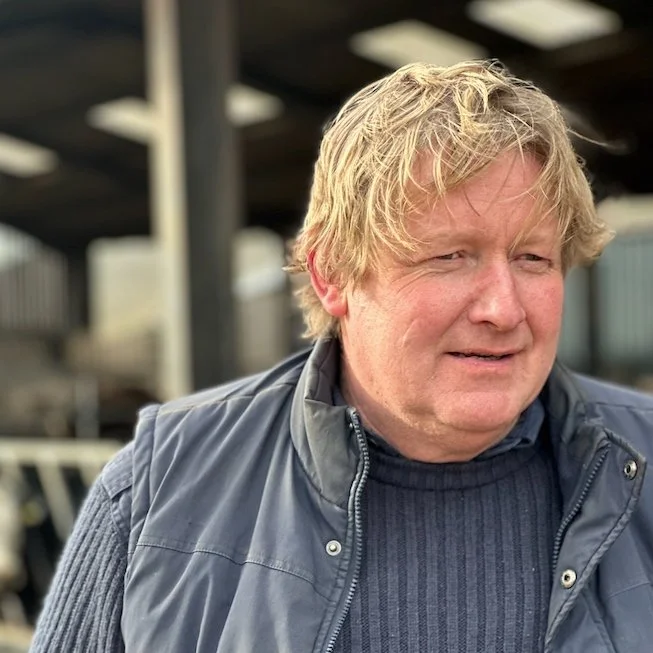
Tom Fairfax
FARM NAME: Mindrum Estate, Northumberland
FARM SIZE: 465ha
DESCRIPTION: Mindrum is a mixed organic farm located in North Northumberland, on the Scottish border. Led by Tom Fairfax, a former conventional farmer responding to ever-tightening margins, the farm is now firmly in the midst of a regenerative transition. Tom applies a holistic approach to managing soil health and plant–animal interactions in order to deliver the farms Mission: “to produce healthy food from healthy ground.”
FARM NAME: Mindrum Estate, Northumberland
FARM SIZE: 465ha
DESCRIPTION: Mindrum is a mixed organic farm located in North Northumberland, on the Scottish border. Led by Tom Fairfax, a former conventional farmer responding to ever-tightening margins, the farm is now firmly in the midst of a regenerative transition. Tom applies a holistic approach to managing soil health and plant–animal interactions in order to deliver the farms Mission: “to produce healthy food from healthy ground.”
Mindrum’s strategy is based on working with natural systems rather than against them. Circular economy principles underpin the operation, with the majority of agricultural inputs — including fertility, feed, and infrastructure — produced on-site. This self-sufficiency supports both ecological resilience and financial viability.
The farm produces organic lamb and beef from a flock of 950 Suffolk Mule ewes and a herd of 95 Beef Shorthorn–Angus cross suckler cows. Arable operations include a diverse range of organic cereals grown across approximately 100 hectares. Over 50 hectares of woodland and semi-natural habitats provide a foundation for biodiversity and integrated land management. An ambitious five-year agroforestry programme is underway, aimed at increasing productivity, improving ecological function, and enhancing long-term farm resilience.
Mindrum is also an active centre for education and public engagement. The farm regularly hosts school visits, educational walks, and practical learning days — inspiring both children and adults to explore the connections between farming, food, and nature.


THEIR APPROACH TO FEEDING THE SOIL:
Tom employs a diverse range of regenerative practices designed to feed and activate the soil, investing considerable time and energy into a range of composting methods, adaptive grazing, seed mixes, and crop rotations. His goal is to harness the inherent productive power of the soil, enabling it to drive plant growth and system momentum with minimal external input.
This approach centres on regenerating the farm’s natural assets using a range of agroecological, agroforestry, and permaculture principles. The farm uses a wide toolkit ranging from bokashi, fermentation, Korean Natural Farming (KNF), vermicomposting, thermal composting, to the deployment of diverse cover crops, adaptive use of livestock (particularly native breed) and adaptive management. Collectively and individually, these tools have a range of effects and interactions. The exciting thing about the soil ecosystem is that it is not just a production medium which responds to management, it also reflects and communicates the health of the system within which it exists. Tom sees the key to this strategy as “using the correct tool correctly” and uses a number of time-tested information management approaches to assist with operational decision making.
Korean Natural Farming, to take a particular example, involves the management of indigenous soil microorganisms — bacteria, fungi, and other beneficial microbes — to support wider production systems in the soil. These microbial communities improve soil carbon and water retention, nutrient cycling, and resilience against pest and disease pressure. They also help reduce nutrient runoff, making KNF a powerful soil fertility and water quality lever, but also, in conjunction with other observation approaches, an effective indicator of impact and system dynamics.
Vermicompost is another key product, used not only as a soil amendment but also to “innoculate” seeds at sowing or tree roots before planting— coating them with living biology to give developing plants an early edge.
CHALLENGES:
Farmers are often defined by the way that they manage challenges. In a dynamic production environment which welcomes diversity and change, challenges often represent opportunities to tune the system or indicators that action is needed somewhere in the system.
Weather - Every farm is at the mercy of the weather – we have to deal with what nature throws at us! On the positive side, the approach we have been following appears to have made the farm a bit more Weatherproof and resilient as “the ground” appears to be a tremendous buffer as it becomes more functional.
Probably the biggest source of challenge comes from inconsistent government intent. With this in mind we are working hard to reduce dependence on government support. Whilst we are not out of the woods yet – our system appears to be increasingly resilient from a financial perspective too.
Managing complexity – having nature as a business partner does introduce some “curved balls” and life is not always predictable. Once we managed to adjust our mindset, and system to flex, we have found that our system is able to be surprisingly flexible when required. Life may be complex but it doesn’t need to be complicated.
Like so many of us, Tom is also grappling with how growers can get society to take more of an interest in how our food is produced. Read his blog for some of his insights.


TOP TIPS:
Take the first step!
Listen to the ground.
Don’t expect it to be perfect first time… or the next time or even the next!
It might be complex but it rarely needs to be complicated!
Channel your inner microbe. (Try thinking like an amoeba 😊)
Use the correct tools correctly but remember, a fool with a tool… is still a fool!

Tom Knowles
FARM NAME: Village Farm, Oxfordshire
FARM SIZE: 150 ha
DESCRIPTION: Village Farm is a mixed farm with 90 ha grazing beef cattle and 60 ha variety of arable crops including wheat, barley, beans, and maize (and oats soon). The farm has been in the family for over 100 years, and from starting life as a dairy, it now grows on about 2/3rds of its arable land bi-crops of wheat with beans or linseed, barley, and oats (for harvest 2026) for Wildfarmed.
FARM NAME: Village Farm, Oxfordshire
FARM SIZE: 150 ha
DESCRIPTION: Village Farm is a mixed farm with 90 ha grazing beef cattle and 60 ha variety of arable crops including wheat, barley, beans, and maize (and oats soon). The farm has been in the family for over 100 years, and from starting life as a dairy, it now grows on about 2/3rds of its arable land bi-crops of wheat with beans or linseed, barley, and oats (for harvest 2026) for Wildfarmed.
Tom’s background is in soil science and chemistry, and the farm makes use of stewardship and SFI agreements, as well as strong involvement with local landscape recovery projects.
In terms of trials, Tom is interested in those that push the science of protein hydrolysates further and provide an evidence base for the growth of positive microbes.


THEIR APPROACH TO FEEDING THE SOIL:
For Tom, it all began in the veggie patch, with compost trials and interplanting. Here they also practice the ‘No Dig’ method after Charles Dowding and have seen significant improvement in the soil and produce quality four years down the line.
On the whole though, Tom recognises that he’s been fortunate with the history of dairy and FYM on the farm which has meant existing soil organic matter levels of 6-15%. To support these numbers, Tom also bi-crops without pesticides, herbicides, or fungicides, and practises small-scale static aerated pile composting, Johnson-Su composting, and experiments with vermicomposting too.
For their Johnson-Su, they make a doughnut-shaped cylinder, about 1m diameter, with two pieces of chicken mesh, and position this under tree cover. Into this, Tom puts mostly wood chip (80-90%) with cow manure and some lawn clippings or nettles to add heat at the thermophilic phase. Lastly, Tom will add an inoculum from a previous pile and then let it break down over the course of a year.
In general, he will have large bags of hot compost (static aerated pile), vermicompost, Johnon-Su, and garden waste leaf mould separated on pallets and ready for use directly or for extracts.
The main way that the compost is used across the crops is by making compost extract in the 1500L
compost brewing tank with small batches of high-quality compost. These compost extracts then
form the basis of foliar nutrition applications.
CHALLENGES:
For Tom, the main challenge is working out how high-quality on-farm composting can sustain a whole farm system, from soil health to environmental resilience.
That means he’s on the lookout for scalable composting equipment and is also working on how to seed inoculate. Using a cement mixer has proven time-consuming but interest in equipment sharing for the simpler process of liquid drill applicator has yet to gain enough interest from nearby contractors.
Soil compaction with grazing livestock is also a challenge he faces.
TOP TIPS:
Position your Johnson-Su under tree cover. This means in the summer it remains shaded and in the cooler months it will better collect the rain. The result, in the UK at least, is less time invested in watering (perhaps once or twice a week in the summer only).
Partner up with nearby growers, neighbour farms, or even create a larger cluster to invest in composting equipment together. See what different people can bring to the collective for example: ride on machines or the solar power to charge them up!
Be the instigator in your community. So many farmers and growers have interest in soil practices but may be hesitant to know how to start or initiate a collective scale project.
Trial out composting and inter-planting methods on a small-scale vegetable patch before scaling to field size.
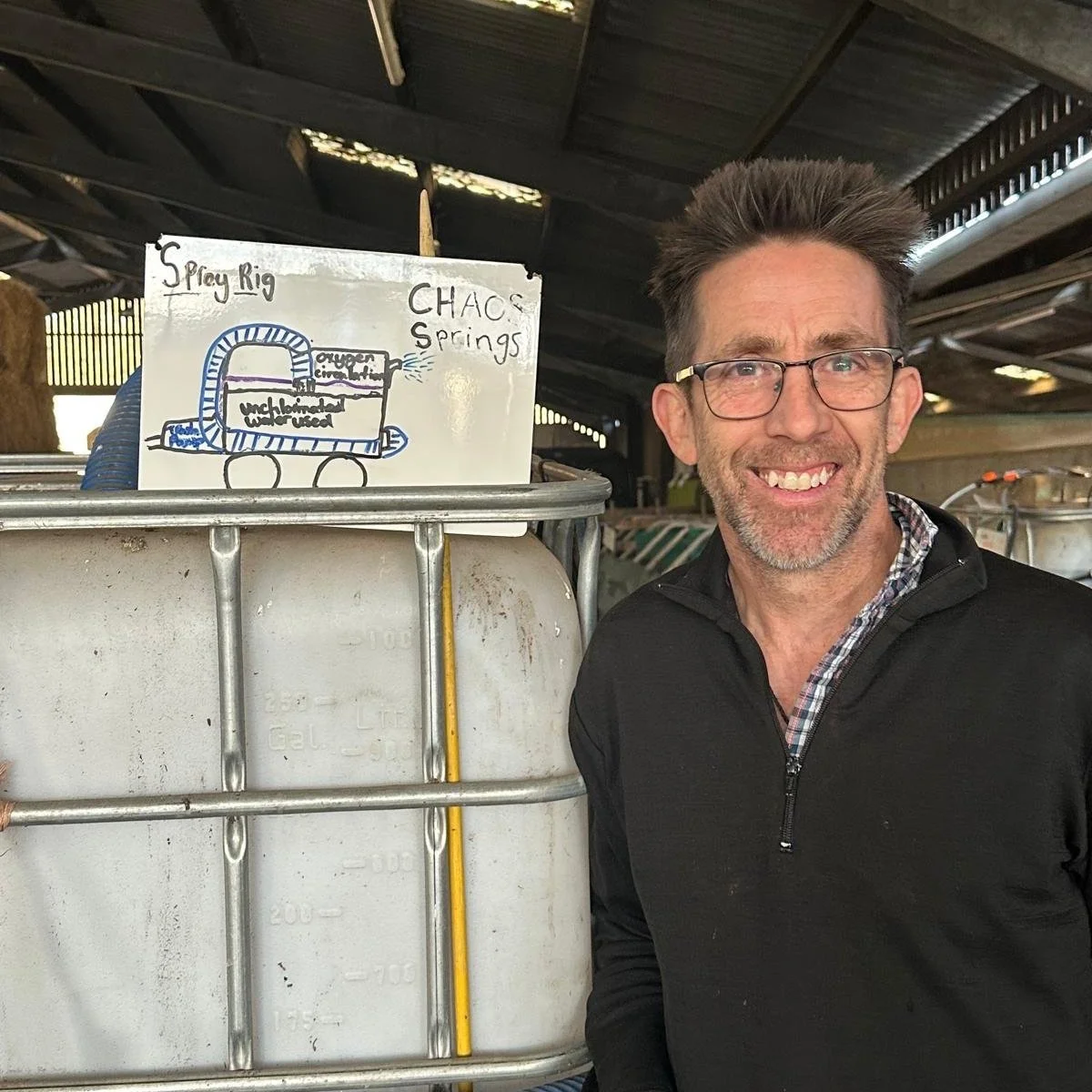
Matt Griffin
FARM NAME: Neidpath Farms, Scottish Borders
FARM SIZE: 1000 ha
DESCRIPTION: Neidpath is a large, upland collective of four farms in Peebles that takes pride in livestock farming with nature.
FARM NAME: Neidpath Farms, Scottish Borders
FARM SIZE: 1,000 ha
DESCRIPTION: Neidpath is a large, upland collective of four farms in Peebles that takes pride in livestock farming with nature.
Here, Matt Griffin is shifting conventional mindsets towards natural ecosystems and lessons learned from famed livestock farmer, Allan Savory. He has since applied holistic management techniques to the land and is pursuing a regenerative business wholly independent of government subsidies.


THEIR APPROACH TO FEEDING THE SOIL:
To build resilience in their soil, stock, and people, Matt looks after 50 Johnson-Su bioreactors that create fungal-rich compost, has a custom-designed sprayer for microbial dispersal, and also experiments with compost amendments including seaweed.
Alongside this, Matt has a prototype continuous-flow worm farm made up of large, raised open, troughs with a winched blade along the bottom. This trims an inch of worm-rich matter from below while Matt and his team fill the troughs from the top.
They feed their worm farm largely with animal manure and the contents of their finished Johnson-Su. They’ve previously tried Bokashi and Elaine Ingham’s composting methods but found their Johnson-Su bioreactors are lower-maintenance and simpler for their operation, while being perfect for the fungi-rich compost they want for their land.
Neidpath also moved from a set stock system towards livestock breeds with native lineages and greater biological efficiency; that means Angus-based gene lines for its cattle and Romney-based sheep flock.
In addition, Matt transitioned to mob-style grazing – short, high-impact grazing with long rest periods – that has improved water infiltration rates, reduced compaction, and helps draw down more carbon for biomass and nutrient cycling. Cows move roughly every day and sheep, every other day, except for 6 weeks at lambing. s at lambing.
CHALLENGES:
Before shifting to mob style grazing, 25km of piping, 70 troughs and 100,000L of water storage needed to be implemented across the lands, alongside the subdivision of 70 paddocks into 200 smaller parcels.
As for their worms, a few years ago they walked into their barn to find the floor covered in dead, escaped worms. They later learned of something called ‘the worm moon’ that may have impacted the oxygen and air pressure enough to have caused the worms to evacuate.
TOP TIPS:
If you can, instead of sowing herbal leys, let nature regenerate itself from its own soil seed bank.
Revitalise dormant sheds or outbuildings into composting rooms or worm farms.
You can buy large rolls of cardboard to help cover, but not seal, your worm farm.
Purify water from public mains before watering your Johnson-Su to spread on the land – many chemicals like chlorine in our mains water kills the bacteria we need to improve soil health.
The longer you leave your Johnson-Su, the more diverse the species of microorganisms. Matt and his team have between 15,000 and 25,000.
Latest & Greatest


This is a block field
You can put any content in here.
Etiam porta sem malesuada magna mollis euismod. Vestibulum id ligula porta felis euismod semper. Maecenas sed diam eget risus varius blandit sit amet non magna. Vestibulum id ligula porta felis euismod semper.
Quisque iaculis facilisis lacinia. Mauris euismod pellentesque tellus sit amet mollis.